Table of Contents
Hard water stains on your showerhead, a metallic taste in your morning coffee, and cloudy water from the tap. You know something’s off with your water, and you’re ready to fix it. Should you install a system that treats water at one faucet, or one that treats every drop entering your home?
The answer depends on your specific water problems. Some issues affect your entire home and require whole-house treatment. But if you’re mainly concerned about what you’re drinking and cooking with, point-of-use (POU) systems, often installed right under your kitchen sink, get the job done.
Common Water Issues in Central PA
Water in Central Pennsylvania carries unique characteristics, whether it flows from a municipal treatment plant or your private well. Hard water is one of the most noticeable issues. You’ll see white, chalky scale building up on faucets or showerheads, a mineral buildup from water containing high levels of calcium and magnesium.
Other aesthetic problems include iron, which leaves rusty red or brown stains in sinks and toilets, and sediment, which makes water appear cloudy or gritty. According to professionals at Penn State Extension and the Environmental Protection Agency (EPA), these are “secondary” contaminants. While not typically a health risk, they affect daily comfort and home maintenance.
Then there are the contaminants you can’t see or smell — the ones that matter for health:
-
Coliform bacteria: Coliform is particularly important for well owners to monitor, as its presence can indicate that harmful pathogens have entered your water supply from agricultural runoff or septic system issues.
-
Lead: Lead can leach into water from older pipes and plumbing fixtures, especially in homes built before 1986, when regulations changed.
-
PFAS: Per- and polyfluoroalkyl substances (PFAS) are water- and heat-resistant, with the ability to repel oil. These “forever chemicals” are an emerging concern for many homeowners who want them removed from drinking water.
What Is a Whole-House System?
Whole-house systems install at the main water line where water enters your home, treating every drop before it reaches any faucet, appliance or fixture. These point-of-entry systems address widespread issues that affect plumbing, fixtures and appliances throughout your property.
They’re ideal for addressing secondary contaminants — aesthetic issues like iron, manganese, pH imbalances and hardness from mineral content. When comparing a whole-house filter and a water softener, keep in mind that softeners target hardness minerals, while filters address other contaminants, such as sediment or iron.
A whole-house system:
-
Prevents damaging scale buildup
-
Improves cleaning effectiveness
-
Extends appliance lifespan
-
Improves comfort
-
Reduces maintenance
What Is a Point-of-Use System?
POU systems are installed at a single location, typically under the kitchen sink, to deliver highly purified water for drinking and cooking. Reverse osmosis (RO) systems are the most common and effective type of POU treatment.
Many high-quality POU systems are certified by organizations like NSF International for their ability to reduce health-related contaminants. When researching the best under-sink water filter system, look for these certifications as proof of effectiveness.
A good RO system tackles the contaminants homeowners worry about most — arsenic, lead, chromium and PFAS. The Centers for Disease Control and Prevention identifies numerous chemicals that can contaminate tap water, and a certified RO system addresses many of these concerns at the point where you need pure water most — in your drinking water faucet.
Match Your Water Problem to the Right System
If you’re trying to figure out where to start, the symptoms you’re experiencing can point you in the right direction. Here’s a quick diagnostic to help you identify which type of system can address your specific concerns.
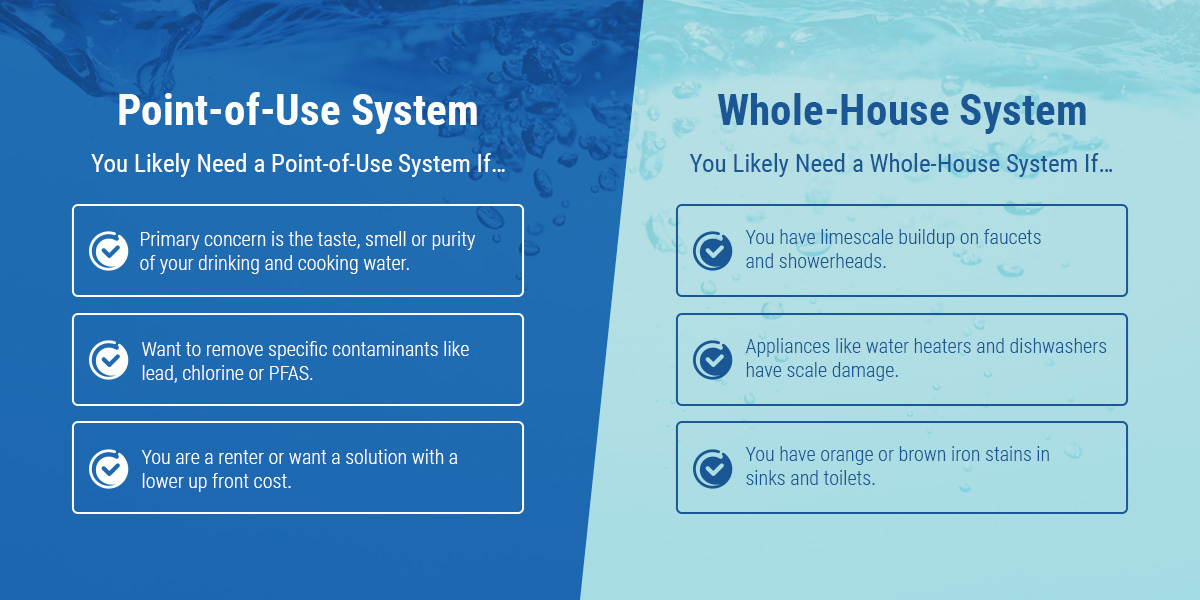
You Likely Need a Point-of-Use System If…
Because POU systems treat water at a single location, they excel in these situations:
-
Your primary concern is the taste, smell or purity of your drinking and cooking water.
-
You want to remove specific contaminants like lead, chlorine or PFAS from the water you consume.
-
You are a renter or want a solution with a lower up front cost.
An RO drinking water system provides highly purified water right where you need it most.
You Likely Need a Whole-House System If…
Whole-house systems treat every drop of water entering your home. Consider this system if:
-
You have limescale buildup on faucets and showerheads.
-
Appliances like water heaters and dishwashers have scale damage.
-
Your skin and hair feel dry after showering.
-
You have orange or brown iron stains in sinks and toilets.
-
Your clothes look dull and feel stiff after washing.
A whole-house water softener or water filter protects your entire plumbing system and every fixture in your home.
When to Consider a Hybrid Solution
The most comprehensive approach often combines both systems. A whole-house system protects your home’s plumbing and appliances from hard water damage, while a POU system delivers the highest level of purity for drinking water. This combination addresses both aesthetic issues throughout your home and health-related concerns at your tap.
Comparing Installation, Maintenance and Cost
When weighing whole-house and under-sink water filter options, consider your budget and long-term needs.
Whole-house systems need a higher up front investment and professional installation at your main water line. However, they protect your entire home’s plumbing system and every water-using appliance.
POU systems cost less initially and sometimes allow for self-installation under a single sink. They only treat water at one location, but that focused approach means lower maintenance costs and simpler filter replacements. The trade-off is that untreated water still flows to showers, washing machines and other fixtures throughout your home.
Many homeowners find that combining both system types delivers the most complete water treatment solution. Your specific water quality, household size and budget will determine which approach makes sense for your situation.
Get a Clear Plan for Your Home With Culligan Water
Choosing between whole-house and POU systems becomes straightforward once you know exactly what’s in your water. That’s where local expertise makes all the difference.
Culligan Water offers a free, no-obligation in-home water analysis using professional-grade field testing. Your local water treatment professional will test for the specific contaminants and characteristics affecting Central PA homes, explain your results in plain language, recommend the right system for your needs and budget, and answer every question you have. With over 80 years of water treatment knowledge backing your local team, you’re getting solutions built on proven expertise.
Schedule your free in-home water test today, or learn more about your local Culligan Water team.